

Biostimulators Explained
The power of Sculptra and Radiesse for long-term collagen renewal from an advanced RN injector’s perspective
When I first began working with biostimulatory injectables, the difference between them and traditional fillers was clear but often misunderstood. Fillers restore space. Biostimulators awaken biology.
Volume loss, sagging, and changes in skin quality begin beneath the surface long before lines and hollows become visible. The body’s ability to produce collagen, the structural protein responsible for firmness, elasticity, and youthful texture, declines steadily over time. This process often begins in the twenties and progresses more rapidly with stress, sun exposure, and genetic influence.
Biostimulators like Sculptra and Radiesse trigger cellular pathways that encourage new collagen formation. Rather than acting solely as space fillers, they rebuild the structural framework under the skin. This regenerative behavior sets them apart and makes them powerful tools for long-term rejuvenation.
Why collagen renewal matters long before lines form
Collagen functions as structural scaffolding within the dermis. It supports soft tissue, maintains skin thickness, and preserves overall integrity. Fibroblasts, the specialized cells responsible for producing collagen, gradually slow their activity with age. As collagen levels decline, the skin loses strength and elasticity, and soft tissue begins to descend subtly over time.
Volume loss often becomes visible first around the temples, cheeks, and jawline. Fine lines appear next, followed by deepening folds. Surface treatments alone rarely correct the true underlying issue, which is the gradual decline in collagen that has been progressing for years.
Stimulating new collagen improves dermal thickness and tissue quality. This internal change produces outcomes that look natural and age-resilient because they are biologically supported, not simply propped up with product.
Understanding biostimulatory injectables from a clinical standpoint
Dermal fillers such as hyaluronic acid products occupy space beneath the skin to restore volume. Biostimulators do something quite different. They initiate a controlled response that activates fibroblasts to produce new collagen over time.
The body perceives the injected material as a mild stimulus. Fibroblasts respond by synthesizing structural proteins, mainly types I and III collagen. Over several months, this newly formed collagen becomes part of the tissue matrix. The result is gradual strengthening of the dermis and improved skin quality.
This process mirrors how the body repairs micro-injury. Instead of simply adding volume, biostimulators encourage tissue to rebuild itself from the inside out.

How Sculptra works to stimulate collagen with poly-L-lactic acid
Sculptra uses poly-L-lactic acid (often abbreviated PLLA), a biodegradable compound with a history of medical use in dissolvable sutures. When injected into the deep dermis or subcutaneous plane, PLLA microparticles create a predictable, localized biological response.
These microparticles act as scaffolding around which fibroblasts begin synthesizing new collagen. Over time, the body metabolizes the PLLA, leaving behind strengthened connective tissue.
Unlike volumizing fillers that deliver immediate change, Sculptra’s effect unfolds gradually. Patients typically notice improvements over several months as collagen forms and integrates with existing tissue. This slow build allows results to appear natural and avoid the exaggerated appearance sometimes associated with quick volumization.
Because the action involves remodeling rather than filling, Sculptra is particularly effective for global volume loss and areas where skin quality has declined, such as the temples, cheeks, and lower face.
If you are exploring structural rejuvenation options or want to understand where Sculptra fits within injectable treatments, our guide to dermal fillers in Hillsboro offers helpful context.
How Radiesse promotes collagen renewal through calcium hydroxylapatite
Radiesse utilizes calcium hydroxylapatite (CaHA) microspheres suspended in a carrier gel. Calcium hydroxylapatite resembles minerals found naturally in bone and teeth, which makes it highly biocompatible.
Once injected, the gel portion provides immediate structural support. Over time, the carrier gel resorbs, and the CaHA microspheres remain in place. Fibroblasts respond to the presence of these particles by producing new collagen around them.
This dual action provides immediate structural correction while also stimulating long term collagen regeneration. Radiesse works well in areas that require enhanced support, including the jawline, midface, and lower face. The outcome often includes improved contour definition and a stronger foundation for the overlying soft tissue.
The regenerative process continues gradually, and improvements often persist long after the microspheres are fully integrated into the tissue.
Key differences between biostimulators and traditional fillers
Biostimulators and traditional fillers both address signs of aging, but they do so through different mechanisms:
- Traditional fillers (e.g., hyaluronic acid) restore lost volume by occupying space under the skin. Effects are often visible immediately after injection.
- Biostimulators trigger collagen production and improve tissue quality over time. Visible change develops gradually as new collagen forms.
- Traditional fillers are ideal for targeted volume replacement and contour refinement. Biostimulators are effective for structural reinforcement and global rejuvenation.
Both categories serve important roles in aesthetic treatment. In many plans, I integrate them strategically by using biostimulators to reinforce tissue strength and traditional fillers to refine contour with precision.
Why natural appearance depends on biologically driven change
Natural results arise when structural support improves over time. Fillers that simply fill space can create a “blanket of volume” effect that looks beautiful at rest but behaves awkwardly during motion.
In contrast, when new collagen weaves into the tissue matrix, the skin supports itself more robustly. Light reflects more evenly. Facial movement feels unrestricted. The outcome resembles the qualities of youthful tissue rather than artificial projection.
This biologically driven approach reflects how I train other providers, with emphasis placed on function as well as appearance.
Collagen biology explained: fibroblasts, extracellular matrix, and tissue behavior
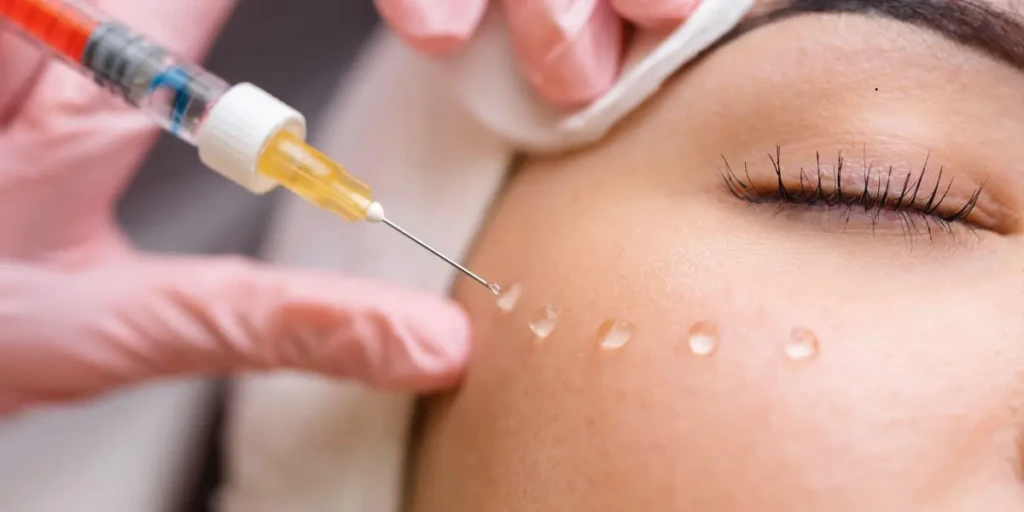
Collagen forms within the dermis as long chains of structural protein. It nests within the extracellular matrix, a complex network of fibers and proteins that provide strength and elasticity. Fibroblasts are the cells responsible for collagen production.
As fibroblast activity declines with age, the extracellular matrix becomes thinner. Elastin, the protein responsible for skin resilience and recoil, gradually breaks down as well. Over time, the skin grows more fragile and less capable of resisting gravitational pull and repetitive facial movement.
Biostimulators send a signal to fibroblasts, prompting increased collagen synthesis. This change reinforces the extracellular matrix, resulting in firmer, more resilient tissue.
Understanding this foundational biology allows providers to design treatments that harness the body’s own regenerative capacity rather than relying only on foreign material for change.
Facial anatomy and how biostimulators integrate within structural planes
Successful biostimulatory injection requires precise knowledge of facial anatomy. Collagen production occurs most effectively when the product is placed within the appropriate anatomical planes.
For example, the deep dermis and subcutaneous layer contain the fibroblasts capable of responding to the biostimulatory signal. Placement too superficially increases the risk of nodules or uneven responses. Too deep may not engage the fibroblasts effectively.
Additionally, an awareness of nearby vascular structures is essential for safety. Knowledge of the facial artery, angular artery, and the labial branches ensures injections respect tissue boundaries and minimize risk.
How treatment planning differs with biostimulators
Biostimulatory treatments do not follow the “one and done” model common with quick volumization.
Instead, planning involves:
- Evaluating the degree of volume loss and collagen depletion
• Assessing tissue behavior and elasticity
• Considering patient goals and how they align with biological timelines
• Spacing sessions to allow collagen formation without overtreatment
Typically, patients undergo a series of sessions spaced several weeks apart. This approach encourages steady collagen growth without overwhelming the tissue.
What patients can expect during and after treatment
Biostimulatory injectable sessions resemble traditional injector appointments in terms of comfort and duration. Topical anesthesia or lidocaine in the product often improves comfort.
After treatment, patients may experience:
- Mild swelling
• Tenderness at injection sites
• Temporary firmness as the product integrates
None of these reactions indicate poor outcomes. They reflect the body’s response to controlled stimulation and typically resolve within a few days.
Visible improvement often begins within weeks, with continued enhancement over the following months as new collagen forms.
Longevity of results and how biostimulators compare
Because biostimulators rely on biological change rather than product mass, their effects tend to last longer than traditional fillers. Many patients enjoy benefits between twelve and twenty four months depending on individual behavior, movement patterns, and lifestyle.
Maintenance sessions help reinforce collagen activity and prolong outcomes.
Integrating biostimulators with other aesthetic treatments
Biostimulators work well in combination with other treatments.
For example, they complement neuromodulators by strengthening the tissue framework while neuromodulators soften dynamic lines. They can also enhance outcomes from traditional fillers by creating a more robust underlying support.
In some cases, reinforcing structural support with biostimulators earlier in the aging process can reduce the need for large volumes of traditional filler later.
Comprehensive planning across modalities often produces the most balanced, natural results.
Case examples illustrating treatment strategy
Over the years, I have observed consistent patterns in how faces respond to regenerative treatment.
- A patient in their forties experiencing early volume loss in the temples and midface often responds well to Sculptra, with gradual improvement in skin quality and contour stability over time.
- A patient in their fifties with jawline laxity and soft jowling frequently benefits from Radiesse to reinforce structural support and enhance definition.
- Some patients benefit from a layered approach, beginning with biostimulators to improve tissue quality and followed by traditional fillers for precise contour refinement.
These examples illustrate how biostimulatory injectables function as part of a comprehensive treatment strategy rather than standalone interventions.
Safety considerations from an advanced injector perspective
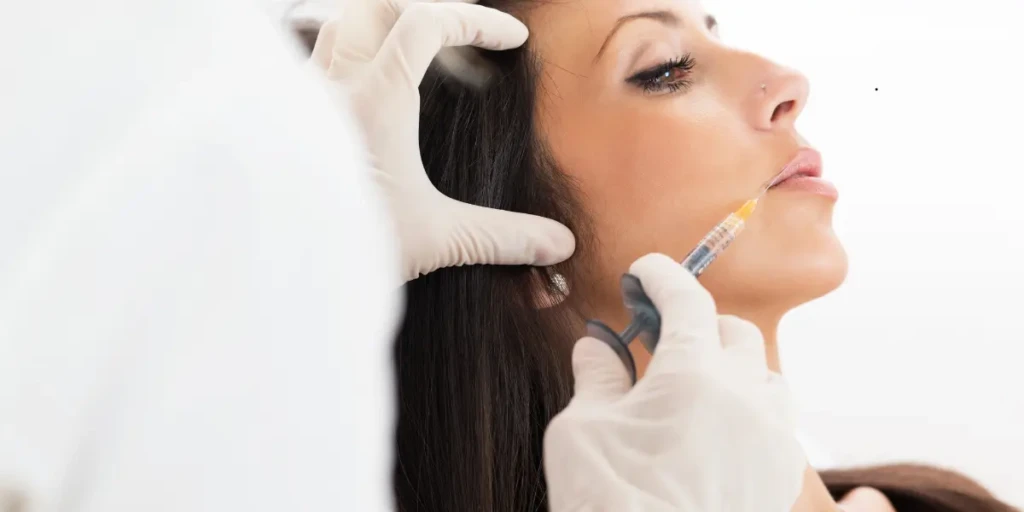
Biostimulators require strong anatomical knowledge and precise technique. Understanding vascular pathways and tissue planes minimizes risk and ensures predictable outcomes.
Continuous education and hands-on training remain essential. As an injector who trains other providers, I emphasize technique mastery over product volume or quick results.
Safety-driven practice protects both short term comfort and long term tissue health.
Emotional and psychological impact of collagen renewing treatments
Many patients share satisfaction not only with their appearance, but with how they feel as they move through the aging process. Regenerative approaches often strengthen self confidence over time because the changes develop in a way that feels authentic and connected to the individual.
Gradual improvement mirrors the natural progression of aging, supporting subtle refinement rather than a dramatic or abrupt transformation.
Frequently asked questions about biostimulatory injectables
When will I see results
Biostimulatory effects develop gradually. Initial changes appear within weeks with continued improvement over several months.
Which product is better for my goals
There is no universal answer. Radiesse offers immediate structure with long term collagen support. Sculptra produces diffuse collagen renewal. Anatomy, degree of volume loss, and goals determine choice.
Is the treatment painful
Most patients tolerate it well. Topical anesthetic or lidocaine in the product improves comfort.
How long do results last
Results commonly persist twelve to twenty four months.
Can I combine with other treatments
Yes. Biostimulators integrate well into broader plans with neuromodulators, traditional fillers, and skin tightening modalities.
The EPION approach to collagen renewal through biostimulatory injectables
At EPION Aesthetics and Wellness, our philosophy prioritizes structural support and long term tissue health. Biostimulatory injectables fit this mindset because they activate the body’s regenerative capacity rather than offering only temporary fullness.
Each treatment plan reflects anatomy, movement, and individualized goals.
A patient centered path forward
Collagen renewal through biostimulators represents a shift toward biologically aligned aesthetic care. By building stronger tissue from the inside out, patients achieve results that feel natural, resilient, and personally meaningful.
If you are ready to explore how this approach fits your goals, scheduling a consultation is the next step.
We can review your anatomy, discuss expectations, and design a plan that supports long-term improvement.
Enduring structural rejuvenation
Aging begins beneath the surface. Supporting collagen production restores strength, resilience, and balance over time. Biostimulatory injectables offer a powerful, clinically grounded way to address aging at its root.