
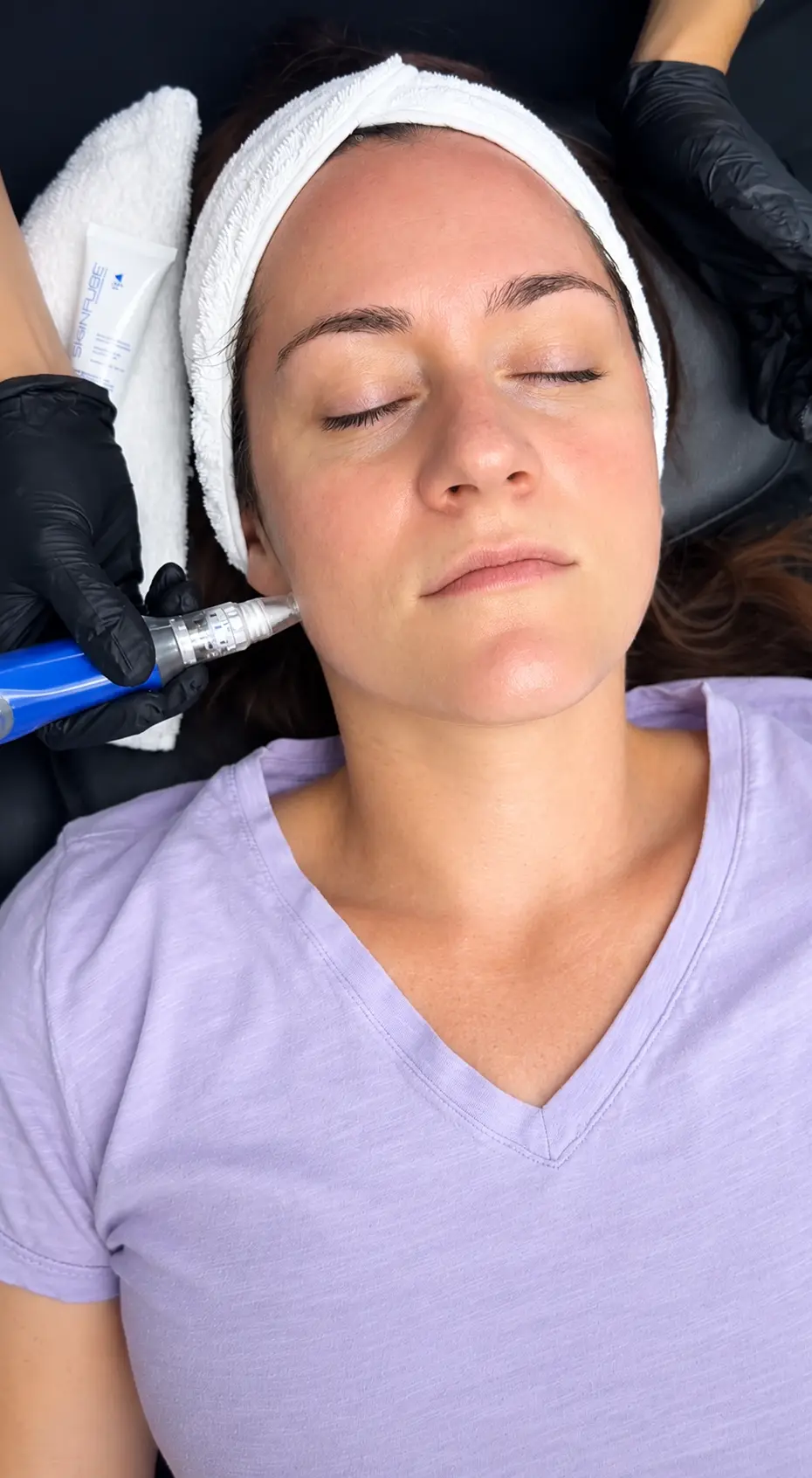
Microneedling heals on two clocks at once, and confusing them is the most common reason patients feel let down. The surface of the skin recovers quickly, usually within a few days, so the redness and the rough, tight feeling settle fast. The deeper work, the collagen your skin builds in response to the treatment, keeps going for weeks and often months after those surface marks fade. Knowing which clock you are watching changes what you expect on day three and what you expect at week twelve. Much of the anxiety around recovery comes from that gap, when the redness clears fast and the mirror has not caught up yet.
This guide walks through what recovery actually looks like after microneedling in Hillsboro, OR, how long each stage lasts, and what makes one person heal faster than the next. It applies whether your session uses SkinPen or EXCEED Unlimited, the two microneedling platforms we keep on hand at Epion.
What does healing mean after microneedling?
Microneedling is a collagen induction treatment. Fine needles create controlled micro-channels in the skin, and the body reads those channels as small injuries worth repairing. That repair response is the entire point, so healing here covers two separate processes running on different timelines.
The first is surface recovery. Right after a session the skin is flushed and warm because thousands of tiny channels have briefly opened the outer layer. Those channels close within hours, and the visible signs calm down over the following days.
The second is dermal remodeling, and it is slower by design. Beneath the surface, fibroblasts begin producing new collagen and elastin, and that fresh tissue keeps maturing for months. This is why skin can look fully recovered at day five while the result that brought you in is still forming.
Keeping the two apart is worth the effort, because they answer different questions. Surface recovery tells you when you can be back in front of people. Dermal remodeling tells you when to judge whether the treatment worked. Skin can look completely healed on top while collagen and elastin are still reorganizing underneath, so the result is not something to read at day five.
Why does Epion use two microneedling platforms?
Epion offers microneedling with two devices, the FDA-cleared SkinPen and EXCEED Unlimited. Both create the controlled micro-channels that set off collagen production, so the choice between them comes down to what your provider is treating and how deep they want to reach. Keeping both available means a session can be matched to your skin rather than fit to whatever single device happens to be in the room.
EXCEED Unlimited is the newer of the two, amiea med’s German-engineered system and the first microneedling device FDA-cleared to treat both facial acne scars and wrinkles. Our owner and lead provider, Amanda Madrigal, BSN, RN, took part in its initial clinical trials last year, before the device was fully launched, and brought it into Epion once it became available. Working with it early gave her a close read on how it performs, and that experience is a large part of why we added a second platform.
How long does the surface take to heal, day by day?
Most people move through a broadly similar sequence after a microneedling session, whichever device is used. Think of the pattern below as a typical arc rather than a schedule. How your own recovery unfolds depends on the depth, the number of passes, the area treated, the device, and your skin, so these are general ranges and not fixed dates. Staying a little pink or flaky a day or two longer than a chart suggests is common and rarely a reason for concern.
Timeframe | What you can expect |
|---|---|
Day of treatment | Redness, warmth, and a flushed look across the treated area. Skin feels tight and sensitive, close to a mild sunburn. |
Day 1 to 2 | Redness starts to fade. Some patients notice mild swelling, and the skin can feel dry or slightly rough. |
Day 2 to 3 | Fine flaking or a sandpaper texture as the outer layer sheds. At deeper settings a light bronzed tone can appear before it lifts. |
Day 3 to 5 | Flaking usually resolves and tone evens out. Many patients feel comfortable in public again and can go back to makeup. |
Day 5 to 7 | Surface signs are largely gone for most people, and skin often looks brighter. The collagen work is only getting started. |
Week 2 onward | New collagen forms beneath the surface. Texture and tone keep refining over the following weeks and months. |
For most patients the socially visible part of recovery often runs one to three days on the face, though a deeper session can extend that. Body areas take longer, for reasons covered further down.
Downtime is a planning decision The depth your provider selects is built around your goals and your calendar, not fixed in advance. A light session before a weekend event and a deeper session booked into an open week are both reasonable, and they carry different recovery windows. Bring your schedule to the consultation. It is a legitimate input into the treatment plan. |
What does the research say about downtime?
Downtime after microneedling is short for most people, and the published safety data supports that. A systematic review of 51 studies covering 1,029 patients found the procedure carried minimal downtime overall, with the longer reports averaging around 3.7 days (Journal of Clinical and Aesthetic Dermatology). The most common effects were the expected ones, redness and temporary irritation, and they resolved on their own with basic aftercare.
A review reports averages across many patients and many devices. Your own recovery still depends on the specifics of your session and how closely you stick to aftercare.
What affects how fast you heal?
Recovery scales with a handful of variables, and a provider adjusts most of them on purpose.
Needle depth carries the most weight. Superficial passes tuned for glow and fine texture close over quickly, while the deeper passes used for acne scars and stubborn lines create more of a repair response and a longer flush.
Treatment area matters as well. Facial skin is rich in the follicles and glands that drive re-epithelialization, so it settles faster than the neck, chest, and backs of the hands, where those structures are sparser. The same depth on the neck will simply take longer to calm down than it does on the cheek.
The number of passes and the device settings work alongside depth. More passes over the same area raise the density of channels and, with them, the intensity of the flush and the length of recovery. A provider dials both to the concern in front of them, so a full-face glow session and a targeted scar session can leave the same person with very different downtime.
Skin tone shapes the plan too. Deeper skin tones can be treated safely and effectively, and experienced providers tend to choose more conservative settings and wider spacing between sessions to lower the chance of post-inflammatory hyperpigmentation, the temporary darkening that can follow inflammation. Steady sun protection during recovery matters even more in these cases.
Everyday habits move the needle as well. Good hydration and steady sun protection support repair, while smoking and unprotected sun exposure slow it. Age and general skin health play a role, since younger and well-maintained skin tends to turn over faster.
Does adding PRP or PDRN change microneedling recovery?
Add-ons can shape both the result and how the skin recovers. Pairing microneedling with PRP therapy in Hillsboro uses your own platelet-rich plasma, applied once the channels are open, to deliver concentrated growth factors into the skin. Combining the two is a well-established pairing that many providers use to support the skin’s collagen response, particularly when the goal is smoothing scars. Some practices also offer PDRN, a compound used in aesthetic medicine to support tissue repair, as an add-on for recovery. Whether either one belongs in your plan is a conversation for your consultation.
Layering active serums or exfoliating acids in the same window works against you. The micro-channels raise absorption for a day or two, so anything potent reaches deeper than usual and can irritate skin that is still settling. That is also why chemical peels in Hillsboro are scheduled apart from microneedling rather than stacked on the same day.
How should you care for your skin while it heals?
Aftercare is simple, and it gives your skin the best conditions to settle quickly. It works alongside things you do not control, though, like how deeply the area was treated and how your own skin heals, so a longer recovery is not a sign that anyone did something wrong. The skin barrier is briefly more open, so the aim for the first few days is to keep it calm and protected.
- Keep the skin hydrated with a bland, gentle moisturizer, and cleanse with lukewarm water and a mild cleanser
- Wear broad-spectrum SPF 30 or higher every day, and stay out of direct sun while the skin is still pink
- Skip makeup for the first 24 hours so the channels can close
- Hold retinoids, vitamin C, and exfoliating acids until your provider clears them, usually after several days
What normal recovery feels like Pink, warm, tight, and lightly rough skin is all expected in the first days, as is fine flaking around day three. That sunburn-like sensitivity fades on its own. Signs that deserve a call are different in kind. Spreading redness that brings heat and throbbing pain is one, and so is anything that looks like infection, such as pus or a fever. Those point to a problem rather than ordinary healing. |
Can you speed up microneedling recovery?
You cannot rush collagen, but you can keep the surface recovery clean and short. Most of it comes down to not adding insult to skin that is already busy repairing.
For the first day or two, heat and heavy sweating are worth avoiding, so hard workouts and hot rooms like saunas can wait until the flush has passed. Sweat and friction irritate open channels and can drag redness out longer than it needs to run. Sleeping well and drinking enough water give the repair process something to work with, since well-hydrated skin heals more readily.
Preparation before the appointment helps just as much. Pausing retinoids and exfoliating acids for several days beforehand and staying out of the sun both calm the skin down, and arriving with a clean, product-free face gives your provider a steadier starting point. Skin that walks in already irritated tends to walk out needing longer to settle.
When will you actually see results?
Visible improvement follows the collagen, not the redness, so the meaningful timeline is measured in weeks. Many patients notice smoother texture and more even tone within two to four weeks, and the skin keeps refining as new collagen matures over the months that follow. Providers at Epion generally recommend a series of three sessions spaced four to six weeks apart for concerns like scarring and lines, with maintenance once or twice a year to hold the result.
Judging the outcome at day ten tends to mislead. By then the surface has calmed, but the collagen and elastin are still remodeling underneath. Skin can look completely healed on top while that deeper work keeps going, so the result is best judged after the first month or two rather than in the first week. If you want a fair read, take a photo before your first session in even, front-on lighting and compare it against the same setup at the twelve-week mark rather than at week one. The month-to-month change is where microneedling shows its hand.
How does microneedling recovery compare with other treatments?
Microneedling sits toward the gentle end of the resurfacing range, which is a large part of its appeal for people who cannot give up a week. Seeing where it lands against other options makes the consultation more productive.
Treatment | How it works | Typical surface downtime |
|---|---|---|
Microneedling (SkinPen or EXCEED Unlimited) | Controlled micro-channels prompt collagen induction | 1 to 3 days, longer for deeper sessions |
Chemical peels | Chemical exfoliation of the outer skin | 3 to 7 days by depth |
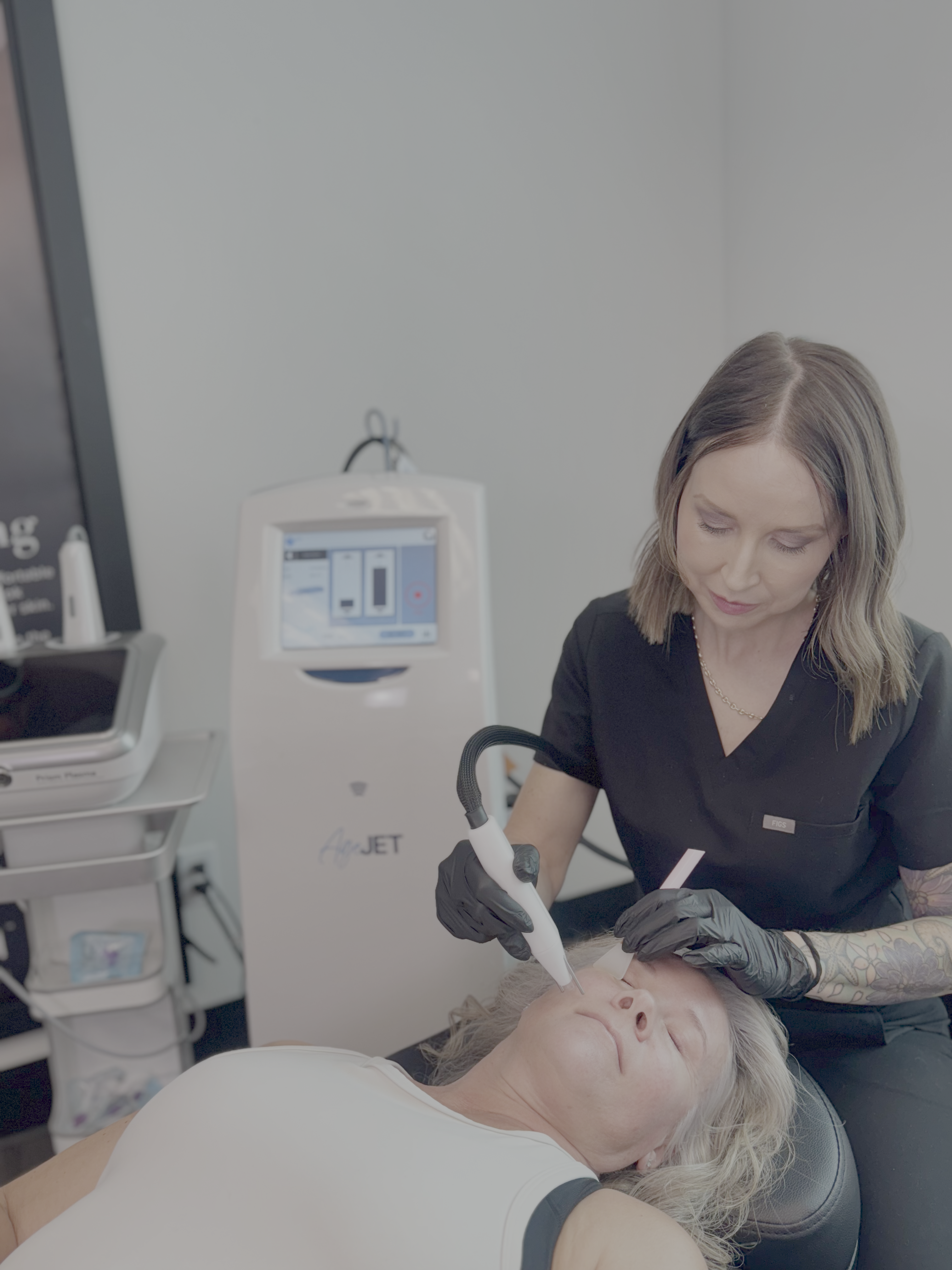
Nitrogen plasma heats the dermis while the surface stays intact | 2 to 10 days by setting | |
Light targeted at pigment and vessels | Minimal, hours to a day |
Patients mostly bothered by pigment and redness sometimes get further with light-based treatment, while those focused on texture and scars tend to land on microneedling or plasma. A consultation sorts out which one fits your skin and your timeline.
Planning your microneedling treatment in Hillsboro
The most useful things to bring to a consultation are a clear sense of what bothers you and an honest read of how much recovery time you have. Those two inputs shape the depth and the spacing of your sessions. Our providers work with both the FDA-cleared SkinPen and EXCEED Unlimited and build the plan, and the device, around your skin rather than a fixed protocol.
Epion Aesthetics and Wellness is located at 5035 NE Elam Young Parkway, Suite 100 in Hillsboro, Oregon. Call 503-713-5543 or schedule your consultation online to talk through what microneedling can do for your skin and how the recovery fits your calendar. You can also read what our Hillsboro patients say before you book.