
As the days grow shorter and the familiar gray skies settle over the Pacific Northwest, you may notice changes in how you feel. Maybe you’re sleeping longer but still waking up exhausted. Your motivation isn’t quite what it used to be, concentrating feels harder, or you’re feeling overwhelmed by things that normally wouldn’t bother you.
Sound familiar?
For many people, seasonal changes affect more than their energy levels. Reduced daylight can influence sleep patterns, mood, motivation, and overall mental well-being. While some experience mild symptoms commonly referred to as the winter blues, others may develop seasonal affective disorder (SAD), a form of depression associated with seasonal changes.
At Epion Aesthetics & Wellness in Hillsboro, Oregon, we believe understanding what’s happening in your body and brain is the first step toward feeling better. Learn more about our ExoMind mental wellness treatment in Hillsboro, OR.
In this article, we’ll explore why seasonal changes affect your mood, energy, and focus, and how innovative technologies like ExoMind transcranial magnetic stimulation (TMS) may fit into an individualized mental wellness plan.
What are the winter blues?
Have you ever noticed that your mood, motivation, or energy seems to change as the days get shorter?
You’re certainly not alone.
The winter blues are a mild, temporary drop in mood and energy that follows the shortening days of fall and winter and usually lifts in spring. The term is informal and describes an experience rather than a diagnosis. People with the winter blues tend to feel flatter and sleepier than usual from roughly November through February, while still managing work and home life.
The pattern is widespread. In an October 2024 Healthy Minds poll of 2,201 U.S. adults, 41% said their mood declines in winter and 28% reported feeling fatigued during the colder months (American Psychiatric Association, 2024). A common experience can still be worth taking seriously, particularly once it starts to affect sleep or work.
How is seasonal affective disorder different from the winter blues?
Seasonal affective disorder, usually shortened to SAD, is a form of major depression whose episodes recur at the same time each year, most often beginning in fall and easing in spring. Psychiatrist Norman Rosenthal and colleagues at the National Institute of Mental Health described the syndrome in 1984, after Rosenthal noticed his own energy falling each winter following a move from South Africa to New York. Their early work also tested bright light as a treatment, and light therapy remains a first-line option today.
Current diagnostic manuals treat the condition as a pattern of depression. In the DSM-5, it appears as major depressive disorder “with seasonal pattern,” which requires depressive episodes that have followed the seasons for at least two consecutive years. The core symptoms match depression more broadly, with persistent low mood and loss of interest at the center. Winter-pattern SAD often adds oversleeping and carbohydrate cravings, along with weight gain and a social withdrawal that some clinicians compare to hibernation.
Winter blues or something more? The winter blues tend to be mild and leave daily life largely intact. Seasonal depression is present most days for two weeks or longer and makes ordinary obligations feel hard to meet. Losing interest in things you normally enjoy is a meaningful signal, as is sleeping far more than usual without feeling rested. If that description sounds familiar, a medical evaluation is a better next step than waiting for spring.
Why do shorter days affect the brain?
Have you ever wondered why getting out of bed feels harder during the winter, even when you’ve had a full night’s sleep?
The answer may have more to do with your brain than you realize.
Sunlight plays an important role in regulating your body’s internal clock, also known as your circadian rhythm. This natural system helps control when you feel awake, when you feel sleepy, and how your body responds to changes in daylight.
As daylight hours decrease during the fall and winter, several biological processes may be affected:
- Melatonin: Often called the sleep hormone, melatonin helps regulate your sleep-wake cycle. Changes in daylight exposure can influence its timing, potentially contributing to increased sleepiness or difficulty waking in the morning.
- Serotonin: This neurotransmitter plays an important role in mood regulation. Research suggests that seasonal changes in sunlight exposure may influence serotonin activity, potentially contributing to changes in mood and emotional well-being.
- Circadian rhythm: Reduced morning light exposure can disrupt your body’s internal clock, affecting sleep quality, alertness, energy, and concentration.
For those of us living in Hillsboro and the greater Portland area, these changes can feel especially noticeable. Between shorter days, persistent cloud cover, and long stretches of rainy weather, opportunities for natural sunlight become more limited.
Understanding how seasonal changes affect the brain can help explain why you may feel more tired, less motivated, or mentally foggy during the winter months.
Why do brain fog and fatigue get worse in fall and winter?
Brain fog is an informal term for slower thinking and trouble concentrating, the sense that ordinary mental tasks take more effort than they should. It has many possible causes, and winter tends to bring several of them at once.
A body clock running late produces something close to mild, ongoing jet lag, with grogginess that lingers past the first cup of coffee. Physical activity usually drops when it is wet and dark by five o’clock, and less movement means fewer of the mood and alertness benefits that exercise reliably provides. Sleep quality often suffers too, since more time in bed does not always mean better rest, and the heavier meals and extra drinks of the holiday season tend to make that sleep lighter still.
Depression itself affects cognition. Difficulty concentrating and making decisions is part of the diagnostic picture for major depression, and the dorsolateral prefrontal cortex, a region involved in planning and working memory, often shows reduced activity in people who are depressed. The same region is the target of TMS.
Hormonal transitions can stack on top of the season. Women in perimenopause and menopause already report brain fog and mood shifts at higher rates, and a dark winter can make those symptoms harder to separate from one another. A careful history helps sort out which factors are doing the most work.
How does stress compound seasonal mood changes?
Stress tends to peak right as the light runs out. The stretch from Thanksgiving through the new year brings travel and family obligations, on top of year-end deadlines and the financial strain of the holidays. Chronic stress keeps the body’s stress-response system switched on, and sustained high cortisol is associated with poorer sleep and lower mood over time.
Some people carry more of this load than others. Those who work night or rotating shifts, including nurses and first responders, can go days in winter without meaningful daylight while managing high-pressure work. We place a particular focus on supporting first responders for exactly this reason.
What is ExoMind?
What if supporting your mental wellness could involve a noninvasive treatment that works directly with the brain’s neural networks?
ExoMind is an innovative, noninvasive brain stimulation technology developed by BTL, the medical technology company behind EMSCULPT NEO, EMFACE, and EMSELLA.
Using advanced transcranial magnetic stimulation (TMS), ExoMind delivers focused magnetic pulses to specific areas of the brain involved in mood regulation, emotional processing, and cognitive function.
One of the primary treatment targets is the left dorsolateral prefrontal cortex, a region involved in regulating mood, attention, decision-making, and emotional responses.
What makes ExoMind different?
– Noninvasive and drug-free: Treatment requires no injections, anesthesia, or surgical procedures.
– Convenient treatment sessions: Sessions typically last 18 to 24 minutes.
– No downtime: Patients can generally return to their normal daily activities immediately afterward.
– Individualized treatment plans: Treatment recommendations are based on each patient’s medical history, clinical needs, and goals.
– Potential for early improvement: In appropriately selected and optimized patients, improvements may be observed in as few as six treatment sessions, although individual responses vary.
Is ExoMind FDA-cleared?
ExoMind has received FDA clearance for the treatment of major depressive disorder in eligible adults who have not achieved satisfactory improvement with antidepressant medication during their current depressive episode.
TMS has an established history in the treatment of major depression. However, research specifically evaluating ExoMind for seasonal mood changes, general brain fog, and wellness-related concerns remains limited.
At Epion Aesthetics & Wellness, we believe in combining innovative technology with thoughtful clinical assessment, individualized recommendations, and realistic expectations.
Our goal is to help patients understand their options and determine whether ExoMind may be an appropriate part of their overall mental wellness plan. Our introduction to what ExoMind is and how a session works covers the basics in more detail.
How does TMS change brain activity?
TMS relies on electromagnetic induction. A coil placed against the scalp produces a brief, focused magnetic field that passes through the skull and induces a small electrical current in the cortex beneath it. Delivered at specific frequencies, those pulses make the targeted neurons fire, and over a series of sessions they appear to strengthen communication between the prefrontal cortex and deeper regions involved in emotion.
The working explanation for its benefit centers on neuroplasticity, the brain’s ability to reorganize its connections in response to repeated activity. In depression, the left dorsolateral prefrontal cortex tends to be underactive, and stimulating it repeatedly is thought to nudge that circuit toward a healthier pattern, much as consistent training strengthens a muscle. We explore this idea further in our article on how ExoMind TMS helps the brain rewire itself.
The underlying technology has decades of history behind it. Anthony Barker’s group at the University of Sheffield demonstrated the first modern TMS device in 1985. The FDA cleared the first TMS system for depression in 2008, following a large multisite randomized trial in which active stimulation outperformed sham treatment in patients who had not responded to medication.
What does the research say about TMS for seasonal depression?
The evidence for TMS in major depression is substantial, built from randomized controlled trials and years of clinical use. Because seasonal affective disorder is formally a pattern of major depression, a person whose winter episodes meet diagnostic criteria falls within the population TMS has been studied in.
Research aimed specifically at seasonal depression is much thinner. Only a small number of trials have looked at TMS in winter-pattern depression, with small samples and mixed results, so there is no clear answer yet on whether TMS performs differently for seasonal episodes than for nonseasonal ones. Light therapy, by comparison, has a long research record in SAD specifically.
The evidence is weakest for uses outside a depression diagnosis. Brain fog and low winter energy are common reasons patients ask about ExoMind, and some report feeling sharper or steadier after a series. Those reports are encouraging, but they have not yet been confirmed in published, peer-reviewed trials of the ExoMind device or its protocol. Patients deserve to know that before they decide.
A note on the evidence: ExoMind has an FDA-cleared indication for certain adults with major depressive disorder. Research specifically evaluating its use for seasonal mood changes, brain fog, and general wellness is still developing. Treatment recommendations should be individualized, and results may vary.
Where does ExoMind fit in an individualized winter wellness plan?
Seasonal mood changes rarely have a single cause, so the strongest plans usually combine approaches. For diagnosed seasonal depression, established options include light therapy and a version of cognitive behavioral therapy adapted for SAD, along with antidepressant medication and, for appropriate candidates, TMS. For milder winter blues, daily habits often carry most of the weight, with clinical support added when symptoms do not respond. The table below compares the main options.
Approach | How it works | Evidence for seasonal mood | Practical notes |
|---|---|---|---|
Bright light therapy | A 10,000-lux light box used each morning helps reset the body clock | Strong for winter-pattern SAD | Usually 20 to 30 minutes after waking; check with a clinician first if you have bipolar disorder or an eye condition |
Cognitive behavioral therapy (CBT-SAD) | Structured therapy that targets winter thought patterns and activity levels | Supported by randomized trials in SAD | Skills learned may carry into later winters |
Antidepressant medication | Adjusts neurotransmitter signaling, often involving serotonin | Established for depression with seasonal pattern; bupropion XL is FDA-approved to prevent seasonal episodes | Requires a prescriber, and side effects vary by medication |
ExoMind (TMS) | Magnetic pulses stimulate the left dorsolateral prefrontal cortex | Strong for major depression overall, with limited research specific to SAD | No downtime, with medical screening before the first session |
Lifestyle support | Morning outdoor light and regular exercise | Supportive across many studies | Low cost and works best alongside other care |
Supporting your mental wellness during the winter months begins with understanding what your brain and body need. While lifestyle changes, therapy, and other established treatments can play important roles, some individuals may benefit from additional options such as ExoMind.
At Epion Aesthetics & Wellness, we take an individualized approach to care, considering your symptoms, medical history, and personal goals to help determine whether ExoMind may be an appropriate option for you.
Our focus is on helping you make informed decisions about your mental wellness with compassionate care, innovative technology, and realistic expectations.
What does an ExoMind treatment series look like?
Your ExoMind experience at Epion Aesthetics & Wellness begins with a personalized consultation. We review your medical history, discuss your concerns and treatment goals, and determine whether ExoMind may be an appropriate option for you.
What can you expect during treatment?
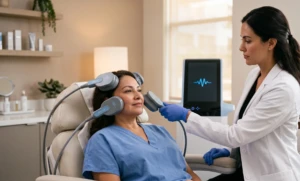
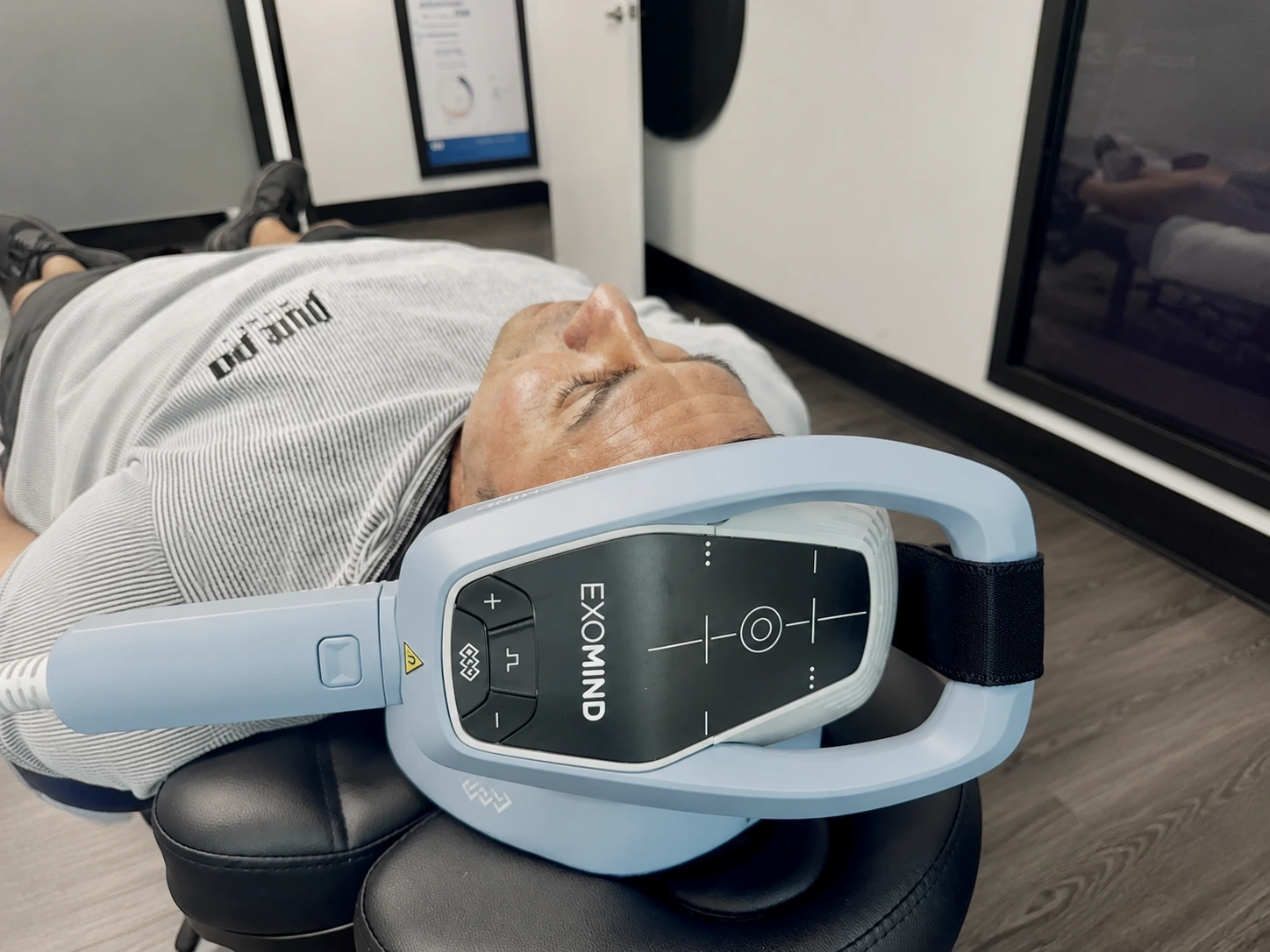
During your session, you’ll relax comfortably in a reclined position while the ExoMind applicator delivers focused magnetic pulses to targeted areas of the brain.
You may experience a tapping sensation on your scalp during treatment. Sessions typically last 18 to 24 minutes, require no anesthesia, and involve no downtime, allowing most patients to return to their normal daily activities immediately afterward.
How many ExoMind sessions will you need?
In appropriately selected and optimized patients, noticeable improvements may be achieved in as few as six ExoMind treatment sessions.
Individual responses vary, and the number of sessions recommended will depend on your clinical needs, treatment goals, and response to therapy. For patients undergoing treatment for major depressive disorder, the full recommended treatment course may differ from a six-session wellness series.
Throughout your treatment plan, we monitor your progress and make recommendations based on your individual response.
Whether you’re exploring options for seasonal mood changes or seeking additional support for an established mental health condition, our goal is to provide thoughtful guidance, personalized care, and realistic expectations.
Who should be cautious about ExoMind?
TMS has a well-established safety profile. The most common side effects are scalp discomfort at the treatment site and mild headache, both of which usually fade within the first few sessions. Seizures are the most serious known risk, and they are rare. Screening keeps that risk low.
Certain conditions or medical devices may require additional evaluation or make ExoMind treatment inappropriate, including:
- Metal implants or certain implanted medical devices in or near the head
- A personal history of seizures or epilepsy
- Bipolar disorder or a history of manic or hypomanic episodes
- Pregnancy
- Certain medications or medical conditions that may increase seizure risk
At Epion Aesthetics & Wellness, patient safety is a priority. Every treatment plan begins with an individualized assessment to determine whether ExoMind is an appropriate option based on your medical history and treatment goals.
What daily habits help the brain through darker months?
Clinical treatment works best on top of a steady daily routine, and a handful of habits carry real weight in winter:
- Get outside within an hour or two of waking, even under cloud cover, since an overcast morning is still far brighter than indoor lighting
- Keep wake times consistent on weekends to hold the body clock steady
- Move most days, ideally outdoors in daylight, to support both mood and sleep
- Stay in regular contact with friends and family, which many people find to be one of the most reliable ways to cope with winter
When to reach out sooner: Seasonal low mood can deepen into something more serious. If you notice thoughts of death or self-harm, or feel unable to keep up with basic daily responsibilities, contact a medical or mental health professional promptly. In the United States, you can call or text 988 at any time to reach the Suicide and Crisis Lifeline.
Is ExoMind right for your winter mental wellness plan?
If you’ve noticed recurring changes in your mood, motivation, energy, or mental clarity during the colder months, you may be wondering whether ExoMind could be an option for you.
ExoMind uses noninvasive transcranial magnetic stimulation (TMS) to target areas of the brain involved in mood regulation. For appropriately selected patients with major depressive disorder, TMS may offer an additional treatment option, particularly when antidepressant medications have not provided adequate relief.
While research specifically evaluating ExoMind for seasonal mood changes, brain fog, and general mental wellness is still developing, understanding your symptoms and exploring appropriate treatment options is an important first step.
At Epion Aesthetics & Wellness, we believe that every patient deserves to feel heard, understood, and supported. Through individualized consultations, we help you explore your options, understand the potential benefits and limitations of treatment, and determine whether ExoMind may be appropriate for your needs.
You don’t have to wait until seasonal changes become overwhelming to start a conversation about your mental wellness.
Planning your ExoMind consultation in Hillsboro
You deserve to feel supported in your mental well-being, no matter the season.
If changes in your mood, motivation, or mental clarity have you wondering whether ExoMind may be right for you, we’re here to help you explore your options.
At Epion Aesthetics & Wellness, we take the time to understand your concerns, review your medical history, and provide individualized recommendations based on your needs and goals.
You can read more about ExoMind in Hillsboro before your visit.
Epion Aesthetics & Wellness is located at 5035 NE Elam Young Parkway, Suite 100 in Hillsboro, Oregon. Call 503-713-5543 or schedule your consultation online to talk through whether ExoMind belongs in your plan this winter. You can also read what our Hillsboro patients say before you book.
References
- American Psychiatric Association. Two in Five Americans Say Their Mood Worsens in Winter; 29% Say “Falling Back” Hurts Their Mental Health. News release, October 30, 2024. psychiatry.org/News-room/News-Releases/APA-Poll-Mood-Changes-in-Winter
- Rosenthal NE, Sack DA, Gillin JC, et al. Seasonal affective disorder: a description of the syndrome and preliminary findings with light therapy. Archives of General Psychiatry. 1984;41(1):72-80. pubmed.ncbi.nlm.nih.gov/6581756
- O’Reardon JP, Solvason HB, Janicak PG, et al. Efficacy and safety of transcranial magnetic stimulation in the acute treatment of major depression: a multisite randomized controlled trial. Biological Psychiatry. 2007;62(11):1208-1216. pubmed.ncbi.nlm.nih.gov/17573044